Mocking Magic: Dan Frazier and the ‘McNeill Scale’

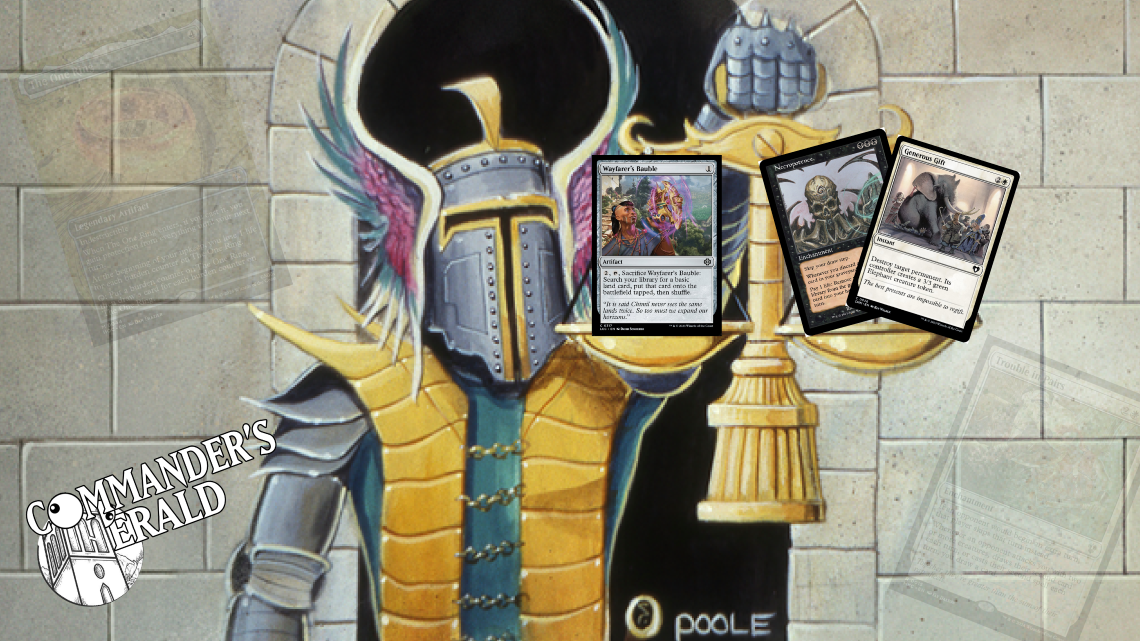
10 years ago, Magic Head Designer Mark Rosewater formally codified the Storm Scale in a December Edition of his column, Making Magic. In the column, Mark described how he developed the ill-named, unofficial scale after being endlessly pestered by nosy Magic players about how likely it was that we would see specific game mechanics return in future premier sets. He would respond to inquiries about the likeliness of the return of a given mechanic by rating it on a scale where Storm was equivalent to a ’10’, stating that of all mechanics it was the least likely to return.
Now, as we all know both Wizards employees and Magic players are uncreative, ravenous jackals that love to wring ideas dry with spin-off after spin-off. As a result of this, over the years we were gifted with additional “Rosewater Scales”, each outlining the likeliness that we would witness the return of other elements of Magic’s history. These scales are all named after each of their members least likely to return to Magic: the ‘Rabiah Scale’ for Planes, the ‘Venser Scale’ for Planeswalkers, and the ‘Beeble Scale’ for creature types.
Much like you, dear reader, I too am a mindless content addict. As such, I have found myself longing for other scales to define the likelihood of other aspects of Magic returning. So with all the recent controversy about alleged art theft and if beloved octogenarians should continue to make art for Magic, I got to thinking: Why don’t we have a scale for how cancelled people are?
A Xerox of a Xerox
The objective:
Make a ‘Storm Scale’-style scale for how likely it is that a given person from Magic’s design history will return to work on a card in an upcoming release. Follow as closely as we can the example set before us by the various other ‘Rosewater Scales’ so that we can be as accurate as possible without official input, because you know Wizards would not touch the topic themselves with a 30-foot pole (an attitude they also have toward many people on this list).
The process:
1. Identify the one person whose work is the absolute least likely to return in a Magic the Gathering release. This includes artists, card designers, game developers, basically anyone whose work shapes the gameplay and aesthetic of a given card or set. Although the original scale specified premier sets, we will want to be a bit more open because even the most beloved Magic contributors don’t work on every standard-legal set. This infamous person will be both the name of the scale and serve as its farthest extreme in the ‘least likely to return’ direction.
2. Identify some key examples of folks whose work is guaranteed to return in most of the upcoming Magic releases in the future to serve as our other extreme.
3. Work from the folks rated a 1 on downward until we arrive back at 10, providing a few key examples and a basic outline of what that rating entails for us.
4. Pat ourselves on the back for wasting an entire afternoon writing up a 2500-word article about the subject.
The point:
See Here!
Introducing the McNeill Scale
If you are a Magic gossip connoisseur like me (or have basic ability to read the titles of articles into which you have already invested 5 minutes of your time), you already know who will take the crown for ‘person from Magic history that Wizards will never again acknowledge the existence of’: Harold McNeill.
Harold McNeill is… an artist, for sure. He has certainly authored artwork for 27 different Magic: the Gathering cards. Among these, his artwork for Darkness and Enduring Renewal are both pretty well liked by the casual player. He is part of a canon of early Magic artists whose work evokes a kind of darker, more abstract and surrealist take on high fantasy than the current art direction. He is also, in all likelihood, an honest-to-God Nazi.
Y’see Harold McNeill loves to put fascist symbolism in his work. His website is full of weird, pseudo-intellectual quotes about truth and justice. His non-MTG artwork features so, so many Iron Crosses and eagles and swastikas. A portrait of Hitler as Jesus here, a skeleton knight with a giant SS on it there. It’s all very ‘middle school edgelord who engages with fascist ideology simply because it’s controversial’. But much like when I was in middle school and started saying ‘swag’ to everything: that which starts in jest, with indulgence, becomes earnestness. His most infamous work in Magic: the Gathering is Invoke Prejudice, a card that depicts klansmen menacingly wielding axes.
So yeah, Harold is our guy. WOTC hasn’t commissioned new MTG artwork from him since at least 1996 and hasn’t reprinted his art in any set since 2006. Also his cards were hand-selected to be removed from that ‘bunch of Legends cards conveniently found in a warehouse’ they totally didn’t just directly reprint in Dominaria United.
So we’ve got our scale’s name, and with it the best example of what maximum cancellation looks like. Now we can start at the other end of the spectrum.
And Dr. Garfield Saw the Light, That it Was Good
The Storm Scale has Flying.
The Rabiah Scale has Ravnica.
The Venser Scale has Jace.
The Beeble Scale has Elves.
The McNeill Scale has Mark Rosewater.
If there is any one person I would say is the absolute most likely to have had a role shaping every single magic card released since they started at Wizards, it’d be Mr. Mark Rosewater himself. He has almost single-handedly reshaped the mechanical and philosophical color pies, has pioneered various concepts of game design philosophy like as-fan, and never shuts the hell up about his various roles in making magic thanks to that damn podcast of his.
So with our extremes being identified, we can start to fill in our 10 scores.
THE NUMBERS, ENVY. WHAT DO THEY MEAN??
Level 1: Will definitely see again, most likely in the next release
Examples: Mark Rosewater, Gavin Verhey
Influence or direct input will be present in basically every major magic release this year. This tier is the heavy hitters, people employed by WOTC in lead roles in Game Design.
Level 2: Will definitely see again, but not necessarily right away
Examples: Ian Duke, Melissa DeTora
Influence or direct input was present in a magic release recently and while may not be in every set it is still highly likely to see this person’s influence in a release this year. This includes most of the design team; a lot of folks who are fulltime WOTC employees but don’t have a score of 1.
Level 3: Will most likely see again, probably many times
Examples: Mark Tedin, Kev Walker
Folks whose work is pretty frequent, foundational, and celebrated. These people are still regularly tagged in to contribute, but might not show up in any given year for whatever benign reason. A lot of the game’s current artists end up here.
Level 4: Will most likely see again, but they have issues that make them less of a guarantee
Examples: Phil Foglio, Rebecca Guay
Folks who have been integral to Magic’s History, but unlikely to show up in any given release. They are on good terms with WOTC, and might be reached out to if a product or set really makes sense for them. Secret lairs especially. Their work does not, for one reason or another, really match the current tone, design, or style of Magic. A lot of the game’s former artists end up here.
Level 5: Dad went out to buy cigarettes
Examples: Richard Garfield, Ken Nagle, Erik Lauer
Folks who have been integral to Magic’s History, but are very unlikely to show up in any given release. That being said, their absence is fully their own choice! There’s always a chance they want to come drop in for a release and I’m sure they’d be welcomed with open arms.
Level 6: ???
Examples: Seb McKinnon, James Paick
These folks have been… Cancelled? Maybe? Maybe not? They have not been commissioned for work in recent sets, but also WOTC has not made any official statements about cutting ties with them. That being said, the optics are pretty mixed and their names are a tad mired in controversy.
Level 7: Unlikely to return, but hey accidents happen
Examples: Terese Nielsen, Noah Bradley
These folks have been Cancelled. And unlike in Hollywood, this actually means something at Wizards (for now, let’s see how the rest of this presidency goes). WOTC made a big stink about letting them go. That being said, their impact on Magic has been storied and long-lasting. Beyond that, they still have shooters; people (if you can call r/freemagic mods ‘people’) advocate for their return. All it takes is WOTC accidentally letting some stoned intern put the incorrect artwork somewhere and suddenly there’s a new public apology on the mothership.
Level 8: Unlikely to return, and even accidents are unlikely
Examples: Marco Nelor, Tianhua Xu
These folks have been Cancelled. Unlike the folks just a level above them, however, they do not have long, storied contributions to the game. Thus, they have been quietly let go, without any of the spectacle. Terrible behavior doesn’t preclude talent, but unfortunately for these folks they are closer to JK Rowling than to Kanye West.
Level 9: Art theft only pays if its from the Louvre
Examples: Fay Dalton, David Sondered, Jason Felix
The folks at WOTC take plagiarism pretty seriously. In almost every instance of this occurring, they have clarified that they will not commission further work from them and will not reprint impacted artworks. They also tend to seek new artwork for reprints that would use their work even if it wasn’t impacted.
Level 10: Unlike MaRo and the Biebs, I will sometimes say ‘never’
Examples: Harold McNeill, Markus Persson
“O bella ciao, bella ciao, bella ciao ciao ciao.”
The Current Controversy: Updating Dan Frazier’s Score
Look, an arbitrary scale is lovely, but it means nothing if we can’t add to it. Much like our lord and savior MaRo himself, I kind of vibe-coded this scale and if I want to actually use it to any effect I’ll have to create some guidelines.
MaRo determines Storm Scale ratings using 5 lenses. I’m built different, so I only need 4.
Popularity– How much do players like this person and their work?
4 levels: Popular, Liked, Polarizing, Disliked
Alignment– How much does this person’s work align with the current design and aesthetic goals for Magic?
3 levels: Parallel, Oblique, Perpendicular
Conduct– How has this person’s actions outside of their work reflected on the content of their character?
4 levels: Stellar, Not Problematic, Problematic, Toxic
Trust– Has this person breached WOTC’s trust, by disparaging them, lying to them, or otherwise harming the company?
3 Levels: Trusted, Questionable, Distrusted
So, let’s check in on Dan Frazier!
Popularity: Popular
Alignment: Oblique
Conduct: Stellar Not Problematic
Trust: Trusted Questionable
Previously, I would have rated Mr. Frazier a 4 on the McNeill Scale. He has a visual style that is striking and iconic. He is the original artist of the Moxen, meaning his work is foundational to Magic’s history. As such he is a very popular artist for the game. Although his artwork is not fully in line with Magic’s current art direction (being much more classic fantasy than modern Magic’s more realistic style), it’s not entirely discordant either! He’s even had his own Secret Lair, which is exactly the kind of thing I’d expect at Level 4.
The problem, of course, arises in the Conduct and Trust lenses of our scale. Although he has a sparkling reputation for the majority of his 30+ year tenure making art for Magic, he has recently come under fire for the art theft of Marta Nael’s The One Ring illustration.
This is something that Wizards takes incredibly seriously; none of the other artists credibly accused of art theft have returned for any future work so far and none of their work has been reprinted since the accusations were found to be true. That being said, the joint statement made by Wizards and Mr. Frazier himself is very different from similar statements released by Wizards on prior occasions of alleged art theft. The wording of the joint statement is much less assured and final than any of the previous instances and seems to have Wizards trying to shield Dan from the responsibility of having traced or stolen the previous artwork.
It is unclear to me, however, why WOTC is framing the issue like this, blaming themselves and their ‘review process’ rather than Frasier himself. Reasons I have seen speculated are: legacy preservation, his advanced age, or Universes Beyond-related art issues.
The first of these is pretty simple; it is the same thing separating folks in Score 7 from Score 8: Frazier’s legacy is in many ways Magic’s legacy. The Moxen are intrinsically tied to Magic’s history and branding in a way that damaging Dan Frazier’s artistic legacy has the potential to damage Magic’s brand identity as a whole.
The main counterpoint to the legacy preservation argument is that Wizards may instead be going easy on Dan because he is an octogenarian classical painter that was asked to make digital art in a style that is not truly his own. The logic for this is fairly simple as well: it is normal to use many references for making art, but moving from a physical medium to a digital environment can really blur the line between what is ‘using a reference’ and what is outright tracing. The gist of the point here is that as an older gentleman, some of the nuances of what is and is not okay to do in a digital medium were lost on Mr. Frazier.
For the final theory, you kind of have to don your “I Hate Universes Beyond” tinfoil hat. Luckily, dear reader, I actually do hate Universes Beyond, so I’ll be your knight in shining aluminum this time. The idea, as I understand it, is as follows: Universes Beyond products have much stricter standards for how non-Magic IP must be portrayed. This means more designs need to look more similar, unlike normal Magic where I’m supposed to just believe that Liliana of the Dark Realms is the same woman as Liliana, Defiant Necromancer. This can put pressure on artists with a much more unique and iconic style to lean more heavily into borrowing aesthetic choices from art that came before, for the sake of ‘consistency’.
So what does all this mean? The biggest impacts of this development have been minor damage to Magic’s brand image and moderate damage to WOTC’s trust of future work from Frazier. Given he was already not a regularly contracted artist in Magic’s history, this is actually pretty damning to his chances of being reached out to in the future. I can’t imagine them wanting to further bolster this controversy by releasing more products specifically highlighting his involvement, which is how all of his recent work was treated. That being said, the joint statement seemed to take great pains not to fully write off future partnerships. Normally, art theft is a pretty easy ticket to a Level 9 score, but in this instance, I believe his score is around a 6, at most 7.
Dan Frazier McNeill Scale Verdict: 6-7

